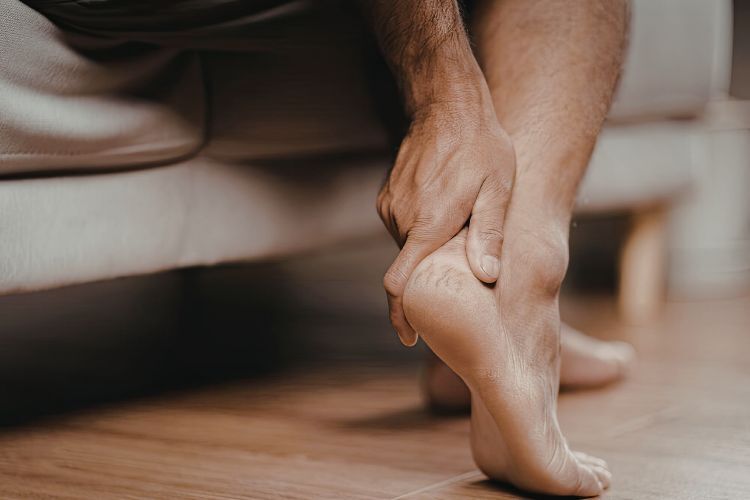
Running is one of the most rewarding forms of exercise you can do, but it does put considerable stress on your feet with every stride. If you have ever woken up in the morning and taken those first few painful steps with a sharp, stabbing sensation in your heel, there is a good chance you are dealing with plantar fasciitis. It is one of the most common running-related injuries, and it affects everyone from weekend joggers to competitive athletes. The good news is that with the right approach to plantar fasciitis treatment, most runners make a full recovery and get back to doing what they love.
At Hands On Health in Marlow, we see this condition regularly, and we want to help you understand exactly what is happening in your foot, why runners are particularly vulnerable, and what you can do to prevent and address it.
What Is Plantar Fasciitis?
The plantar fascia is a thick band of tissue that runs along the bottom of your foot, connecting your heel bone to your toes. Its job is to support the arch of your foot and absorb the shock that comes with every step. When this tissue becomes irritated or inflamed, usually through repetitive strain, the result is plantar fasciitis.
The hallmark symptom is heel pain that is worst with your first steps in the morning or after long periods of sitting. The pain often eases as you warm up, which is why many runners push through it without realising how much damage they may be accumulating. Left untreated, the condition can become chronic and significantly affect your training.
Why Runners Are at Higher Risk
Running places the plantar fascia under repeated load with every foot strike. The faster and further you run, the more cumulative stress builds up in the tissue. Several factors increase your risk significantly.
A sudden spike in mileage is one of the leading culprits. If you have recently increased your weekly distance by more than 10%, your body may not have had enough time to adapt. Tight calf muscles and a limited range of motion in the ankle also place extra strain on the plantar fascia, as do worn-out running shoes that no longer provide adequate support or cushioning.
Running predominantly on hard surfaces, poor foot mechanics such as overpronation, and a high or low foot arch can all compound the problem. Runners who train early in the morning on cold muscles are also at heightened risk, as the tissue is less pliable before it has warmed up.
Recognising the Symptoms Early
Catching plantar fasciitis early gives you the best chance of a quick recovery. The most common signs include a sharp or burning pain at the base of the heel, aching along the arch of the foot, and increased pain after rather than during a run. You may also notice that pain is worse after you have been inactive for a while, such as getting up from your desk or stepping out of bed.
If you are experiencing any of these symptoms, it is worth having them properly assessed. Continuing to train through significant pain can turn a manageable issue into something that sidelines you for months.
Plantar Fasciitis Treatment Options
The good news is that most cases respond very well to conservative treatment. Here is what the evidence supports.
Rest and load management is often the starting point. This does not necessarily mean stopping all exercise, but it does mean reducing impact and allowing the tissue to recover. Cross-training with swimming or cycling can help maintain your fitness while the foot heals.
Targeted plantar fasciitis exercises and stretches play a central role in recovery. Calf stretches, particularly when performed with the knee bent to target the soleus muscle, have a strong evidence base. Plantar fascia-specific stretches, where you pull your toes back towards your shin before taking your first steps in the morning, are equally important. These exercises reduce tension on the fascia and encourage healthy tissue remodelling.
Hands On Health offers a range of hands-on therapies that can make a real difference to recovery time. Our team works with runners to identify the root cause of the problem, whether that is a tissue restriction, a movement pattern, or a training load issue, and creates a treatment plan tailored to your needs. If you would like to learn more about how we approach heel and foot pain, you can explore our osteopathy services to see what might be right for you.
For at-home support, plantar fasciitis treatment at home measures such as ice application, rolling a frozen water bottle under the foot, and wearing supportive footwear from the moment you step out of bed can all help manage symptoms day to day.
Plantar Fasciitis Stretches for Runners
A simple daily stretching routine can significantly reduce pain and speed up recovery. The following are worth doing morning and evening.
Calf stretch at the wall: Stand facing a wall, place your hands on it for support, and step one foot back with the knee straight. Press the heel firmly into the ground and hold for 30 seconds. Repeat with a slight bend in the back knee to target the deeper calf muscle.
Towel or band stretch: While seated, loop a towel around the ball of your foot and gently pull your toes back towards you. Hold for 30 seconds and repeat three times on each side.
Seated plantar fascia massage: Cross one foot over the opposite knee and gently pull the toes back while massaging the arch with your thumb. This is particularly effective before those first painful morning steps.
These plantar fasciitis stretches are simple enough to build into your daily routine without disrupting your schedule. Our team can show you the correct technique if you are unsure.
How Long Does Plantar Fasciitis Last?
One of the most common questions we hear is: how long does plantar fasciitis last? The honest answer is that it varies. Mild cases caught early and managed well can resolve in a matter of weeks. More established cases, particularly those where training has continued through significant pain, can take anywhere from three to twelve months. Chronic cases involving partial tears of the fascia may take longer still.
The single biggest factor in recovery time is how quickly you seek appropriate treatment and how consistently you follow through with your rehabilitation. Runners who address plantar fasciitis early and commit to their prescribed exercises and load management consistently achieve faster, more complete recovery.
Preventing Plantar Fasciitis Before It Starts
Prevention is always preferable to treatment. If you are a runner, the following habits significantly reduce your risk.
Increase your weekly mileage gradually, following the widely recommended guideline of no more than a 10% increase per week. Replace your running shoes regularly, typically every 500 to 800 kilometres, as the cushioning degrades well before the upper shows visible wear. Incorporate regular calf and foot strengthening into your training programme, and warm up properly before heading out for early morning runs.
If you have had plantar fasciitis before, you are at higher risk of recurrence, so maintaining these habits year-round is especially important. Our sports injury rehabilitation programme is designed to help runners build the resilience they need to stay injury-free over the long term.
When to See a Professional
If your heel pain has not improved with two to three weeks of self-management, or if it is severe enough to affect your daily walking, it is time to get it properly assessed. A physiotherapist can confirm the diagnosis, rule out other causes such as a heel spur or nerve entrapment, and create a personalised treatment plan.
At Hands On Health in Marlow, we work with runners at every level, from those completing their first 5k to those preparing for marathons. Our approach combines hands-on treatment with education and exercise rehabilitation to address not just the symptoms but the underlying cause.
If you are struggling with heel pain or want to get ahead of an injury before it becomes a bigger problem, we would be happy to help. Book a consultation directly to get started.
Plantar fasciitis is frustrating, but it is also highly treatable. With the right support, most runners return to full training and often come back stronger for having addressed the underlying factors that caused the problem in the first place.